
 tr
tr de
de
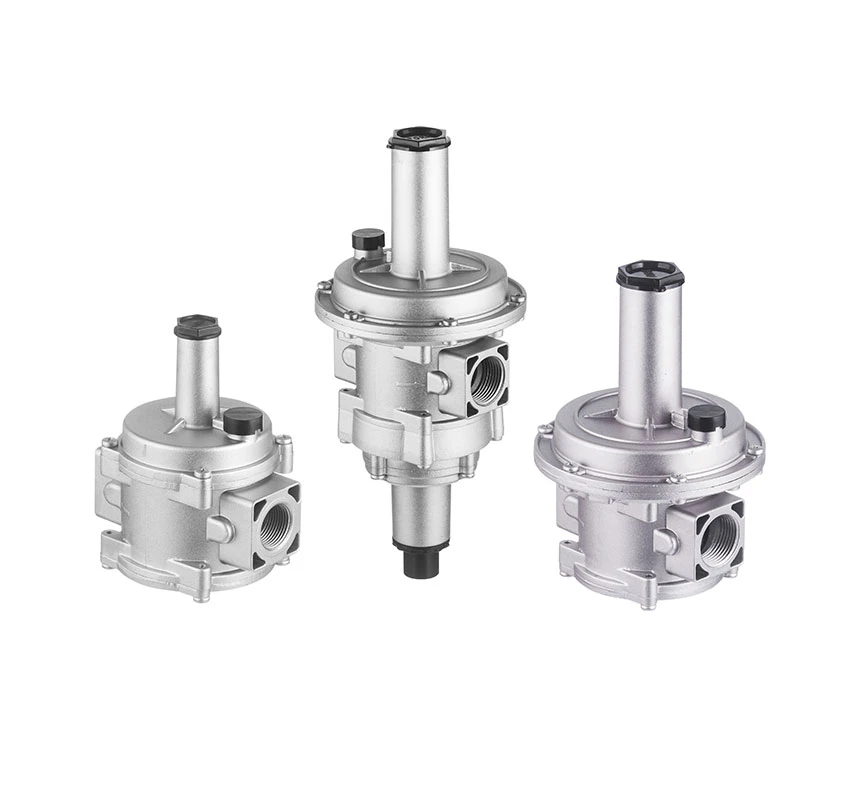
Differences Between Shut-Off Regulators and Standard Regulators
Natural gas regulators are essential components for ensuring safe and efficient gas usage in both residential and industrial systems. These devices reduce the high pressure from the gas network to a usable and stable level required by equipment.
What Does a Natural Gas Regulator Do?
The pressure supplied by natural gas distribution networks is too high for direct use. A gas regulator reduces this pressure and maintains it at a constant level suitable for end-use applications.
- In residential systems: approximately 21 mbar
- In industrial applications: around 300 mbar
Maintaining stable pressure at these levels is critical for system safety and performance.
What Is a Standard (Straight-Through) Regulator?
Standard regulators are designed to reduce and stabilize gas pressure. They typically include:
- An internal filter
- A pressure regulation mechanism
These components work together to lower the inlet pressure to the desired outlet pressure and keep it consistent during operation. They are widely used in standard applications.
What Is a Shut-Off Regulator?
Shut-off regulators offer all the functions of standard regulators with an added safety feature.
In addition to pressure regulation, they:
- Monitor inlet and outlet pressure
- Automatically shut off gas flow in case of pressure fluctuations or instability
This built-in safety mechanism makes shut-off regulators ideal for systems where safety is a top priority.
Key Differences Between Shut-Off and Standard Regulators
| Feature | Standard Regulator | Shut-Off Regulator |
|---|---|---|
| Pressure reduction | ✔ | ✔ |
| Internal filter | ✔ | ✔ |
| Automatic shut-off | ✖ | ✔ |
| Safety level | Standard | High |
Important Considerations for Installation
Use Proper Connection Components
When installing regulators, avoid using rigid threaded pipes or standard fittings. Instead, union fittings (swivel type) should be used to ensure easier installation and proper alignment within the pipeline.
Ensure Pipeline Cleanliness
Before installation, the gas line must be thoroughly cleaned. Although regulators include internal filters, debris from new installations—especially in construction sites—can damage internal components such as the diaphragm.
Avoid Reverse Flow During Testing
Applying reverse flow during testing can push contaminants into the regulator, which may affect its performance and lead to malfunction.
Do Not Exceed Maximum Inlet Pressure
Gas regulators are precision devices and must not be exposed to pressures above their maximum rated inlet pressure.
In some applications, high-pressure testing is performed after installation. This can damage critical internal parts such as:
- Diaphragms
- Springs
Always ensure that testing pressure does not exceed the specified limits.
Conclusion
Natural gas regulators play a vital role in maintaining safe and efficient gas systems. Depending on the application, choosing between a standard regulator and a shut-off regulator is crucial.
While standard regulators are suitable for general use, shut-off regulators provide enhanced safety by automatically stopping gas flow in case of pressure irregularities.
Proper installation, clean pipelines, and correct pressure management are key factors in ensuring long-term performance and safety.
