 tr
tr
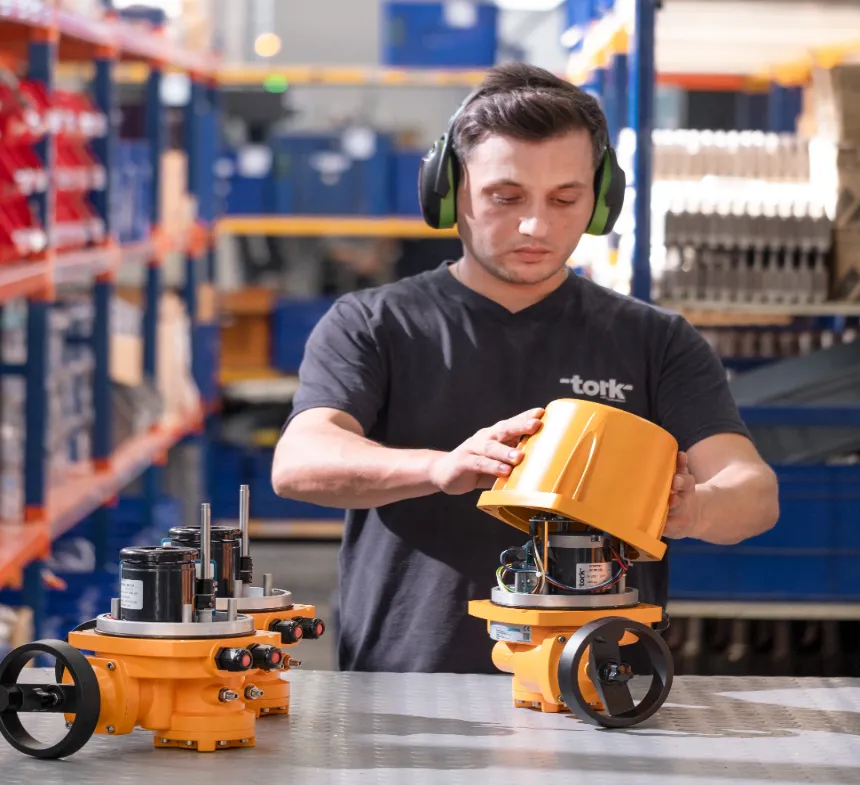
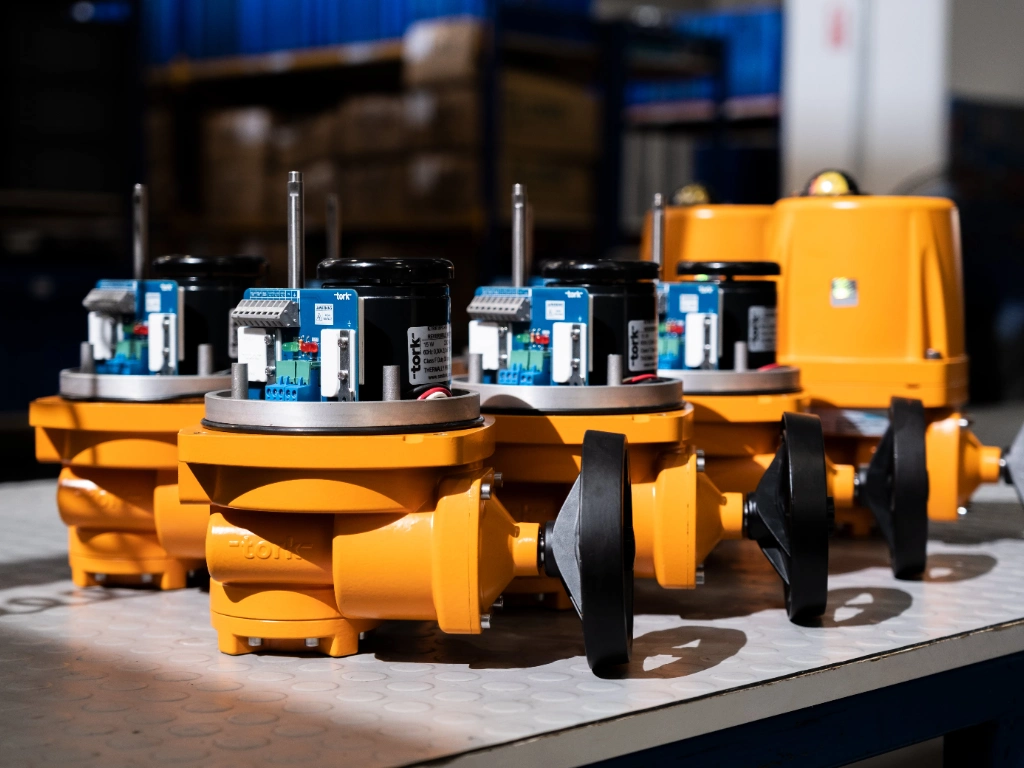
Electric actuators are power transmission devices that convert the driving force provided by an electric motor into rotational or linear motion. In rotary electric actuators, the driving force generated by the motor enables the gears within the body to produce rotational movement. This rotation is optimised for specific requirements, such as low speed and high torque for quarter-turn actuators or higher speeds and lower torque for multiturn actuators.
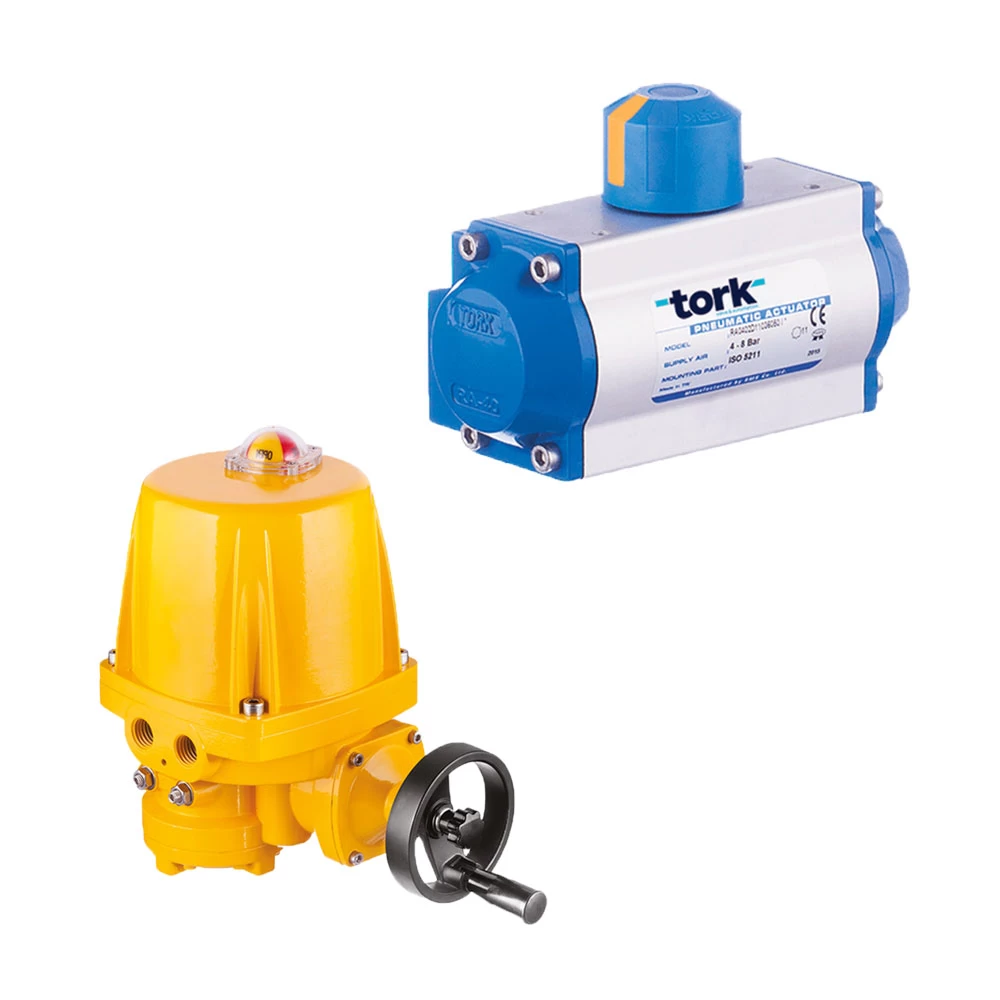
Quarter-Turn and Multiturn Actuators
Quarter-turn electric actuators are commonly used in small valves, such as butterfly or ball valves, that require 90-degree rotation for fully open or fully closed positions. In contrast, multiturn actuators are employed in larger butterfly and ball valves with reducers or directly in globe and knife valves.
Key Advantages of Electric Actuators
The widespread use of electric actuators in industrial applications can be attributed to the following advantages:
- Availability of electricity in most locations,
- High torque generation with minimal energy consumption,
- Durability and long product lifespan,
- Compact and lightweight design,
- High protection class,
- Precise proportional control capability,
- Wide operating voltage range,
- Extensive maximum rotation angle tolerance.
Electric actuators can be manufactured as on-/off-Controlled Electric Actuators or Proportional-Controlled Electric Actuators, depending on the specifications of the connected valve and customer requirements.
- On/Off Controlled Actuators: These provide position feedback at fully open and fully closed positions.
- Proportional Controlled Actuators: These allow control throughout the entire range of motion and provide real-time position feedback via digital commands or analogue signals (e.g., current or voltage).
Manual Operation and User-Friendliness
Electric actuators are equipped with a manual-operating handle in case of a power outage. The handle's position, locking system, and torque requirements are optimised for user convenience. Excessive torque or an overly large number of turns for opening/closing operations is undesirable. At TORK, these features are designed and produced to be highly ergonomic and user-friendly, based on extensive research, customer feedback, and technical calculations.
You May be Interested In: What is an Actuator and an Actuated Valve and How Does It Work?
What are the working principles of these systems? In this article, we will go into detail to inform you about the actuators we have in our product portfolio as Sms-Tork.
Precision and Reliability
The mechanical gear system in electric actuators ensures consistent speed and torque throughout the motion, enabling precise proportional control. TORK's quarter-turn actuators provide a precision level of 1% within a 90-degree rotation, while multiturn actuators achieve up to 0.1% precision.
Differentiation Through Excellence
In a competitive industrial market with many brands and models, becoming a preferred choice requires meeting stringent criteria. Reliability stems from designing devices that operate efficiently over the years without failure. TORK achieves this by proactively identifying potential issues through field feedback and addressing them, ensuring the development of robust, stable, and low-maintenance products.
Recognition and Awards
TORK's actuators have earned high customer praise and have also been recognised by independent organisations. For example, our multiturn electric actuator received prestigious design awards in the industrial design category, including the Good Design Award (USA) and the IF Design Award (Germany).
Additionally, TORK's commitment to innovation extends beyond product design. As a testament to our innovative company culture, we have twice won first place in the "Innovation Cycle" category at the Innovation League Awards organised by the Turkish Exporters ' Association (TİM). This achievement highlights the strong integration of innovation into every aspect of our operations.
