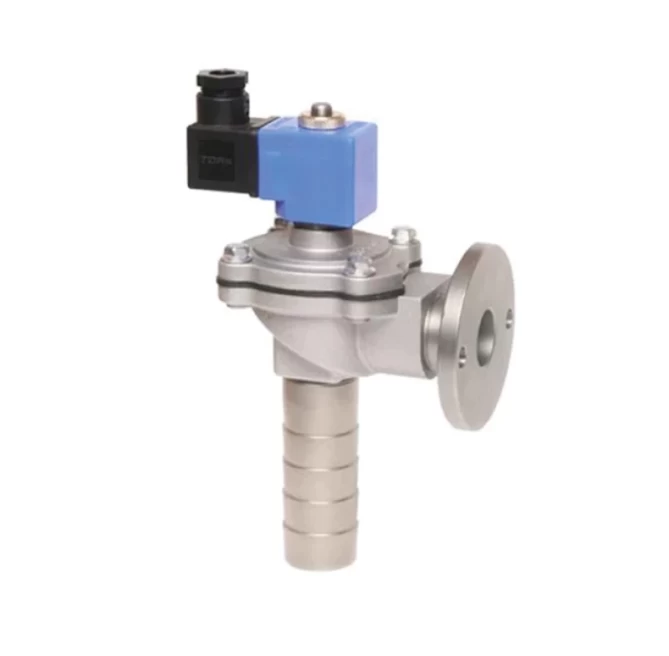
PL1070 Series Flanged Union-Connected Pulse Jet Valves: Maximum Efficiency for Dust Collection Systems
Dust collection systems used in industrial production facilities play a critical role in both environmental sustainability and production efficiency. Especially in industries with high dust generation, such as cement, steel, power generation, chemical processing, and feed production, filtration systems must remain clean and permeable at all times.
Filter clogging can restrict airflow, overload exhaust fans, and even cause unplanned production shutdowns, resulting in significant financial losses. To minimize these operational risks, the PL1070 Series Flanged Union-Connected Pulse Jet Valves have been developed as a key component of modern filter cleaning systems, offering powerful pulse performance, energy-efficient operation, and fast installation advantages.
What Is a Pulse Jet Valve and Why Is It Used?
Pulse jet valves are high-speed solenoid valves that deliver compressed air into a filtration system within milliseconds (typically 100–150 ms), causing accumulated dust on filter bags or cartridges to be removed through a powerful shock-cleaning effect.
The operating principle of pulse jet filtration systems relies on short-duration but high-energy compressed-air pulses that reverse the airflow and break loose the dust cake accumulated on filter surfaces.
Effective and regular filter cleaning provides several direct benefits:
Maintaining Continuous Airflow
Keeps differential pressure stable and ensures maximum suction performance.
Reducing Energy Consumption
Prevents excessive loading of main exhaust fans, resulting in lower electricity costs.
Extending Filter Life
Proper pulse pressure and timing reduce mechanical wear on filter bags, lowering replacement costs.
Ensuring Production Continuity
Minimizes downtime caused by filter contamination and improves overall plant efficiency.
For this reason, selecting the right pulse jet valve and connection architecture has a direct and measurable impact on filtration system performance.
Financial Performance Note
In industrial facilities, inefficient pulse jet valves or valves with continuous air leakage can increase compressor room energy consumption by up to 30%.
Thanks to its optimized internal geometry, the PL1070 Series generates maximum pulse energy with minimal compressed-air consumption, allowing it to pay for itself within a short period.
Features of the PL1070 Series Flanged Union-Connected Pulse Jet Valves
The PL1070 Series has been specifically engineered for demanding heavy-industry applications and large-scale filtration systems requiring high cleaning performance.
Its flanged and union-connected body design minimizes aerodynamic losses and provides superior airflow capacity.
Key Technical Features
- Flanged and Union Connection Design for easy installation without welding or threading.
- High Airflow Capacity (High Kv Value) enabled by enlarged internal flow passages.
- Corrosion-Resistant Aluminum Body with durable epoxy-coated die-cast construction.
- Stainless-Steel Internal Components including core assemblies, springs, and fasteners.
- Advanced Diaphragm Options including NBR, Viton (FKM), and next-generation Thermoplastic diaphragms.
- Low-Power Solenoid Coil featuring fast electromagnetic response and IP65 protection.
- High-Speed Opening and Closing Performance minimizing compressed-air waste.
Operational Advantages of the Flanged Union Connection Design
1. Faster Installation and Maintenance
With traditional threaded pulse jet valves, replacing a single valve often requires loosening or rotating the entire compressed-air manifold.
With the PL1070 Series, only a few bolts and the union nut need to be loosened to remove the valve.
This innovative design can reduce maintenance and service times by up to 60%.
2. Superior Sealing and Leak Prevention
One of the largest hidden costs in pulse jet filtration systems is undetected compressed-air leakage.
Special sealing gaskets and the union-clamping mechanism provide excellent sealing performance, even during high-vibration pulse cycles.
This eliminates air leakage and directly reduces compressor operating costs.
3. Maximum Airflow and Pulse Efficiency
Threaded connections often create turbulence and pressure losses due to internal restrictions.
The smooth internal geometry of the PL1070 Series eliminates airflow resistance, allowing compressed air to reach filter bags with greater velocity and pulse energy.
As a result, superior cleaning performance can be achieved even at lower operating pressures.
Importance of the PL1070 Series in Dust Collection Systems
Dust deposits that remain on filter surfaces gradually increase system differential pressure (ΔP) to critical levels.
This leads to:
- Increased fan energy consumption
- Reduced filtration efficiency
- Higher risk of environmental dust emissions
The PL1070 Series eliminates these problems by delivering consistent and powerful compressed-air pulses that restore filter bag permeability to near-original performance levels.
Main Application Areas
- Cement Plants (clinker processing, crushing, and packaging lines)
- Steel Mills and Foundries (electric arc furnace extraction systems)
- Thermal Power Plants and Energy Facilities (ash and coal handling filters)
- Chemical, Petrochemical, and Plastic Processing Plants
- Feed Mills, Flour Mills, and Grain Storage Facilities
- Mining, Crushing, Screening, and Mineral Processing Plants
- Industrial Paint and Pigment Manufacturing Facilities
Engineering Criteria for Selecting the Right Pulse Jet Valve
To maximize the performance of your dust collection system and achieve the best results with the PL1070 Series, the following parameters should be considered during system design and procurement:
Filter Bag Dimensions and Quantity
Valve size (e.g., 3/4", 1", 1½") should be selected according to the total volume of the filter row being cleaned.
Operating Pressure Range
Pulse jet valves typically perform best between 3 and 8 bar. Coil and diaphragm selection should match system pressure requirements.
Process and Ambient Temperature
Diaphragm material selection should be based on process gas temperature. For example, high-temperature applications such as thermal power plants may require Viton or Thermoplastic diaphragms.
Timer Configuration
Pulse duration should generally be set between 100 and 150 milliseconds, while the pause interval should be adjusted according to differential pressure conditions.
A valve that remains open longer than necessary does not improve cleaning efficiency—it only wastes compressed air and increases compressor operating costs.

 tr
tr de
de pl
pl